

Back on the Line
After years of running the restaurant from the edges, I started cooking brunch again and fell back in love with my own menu.
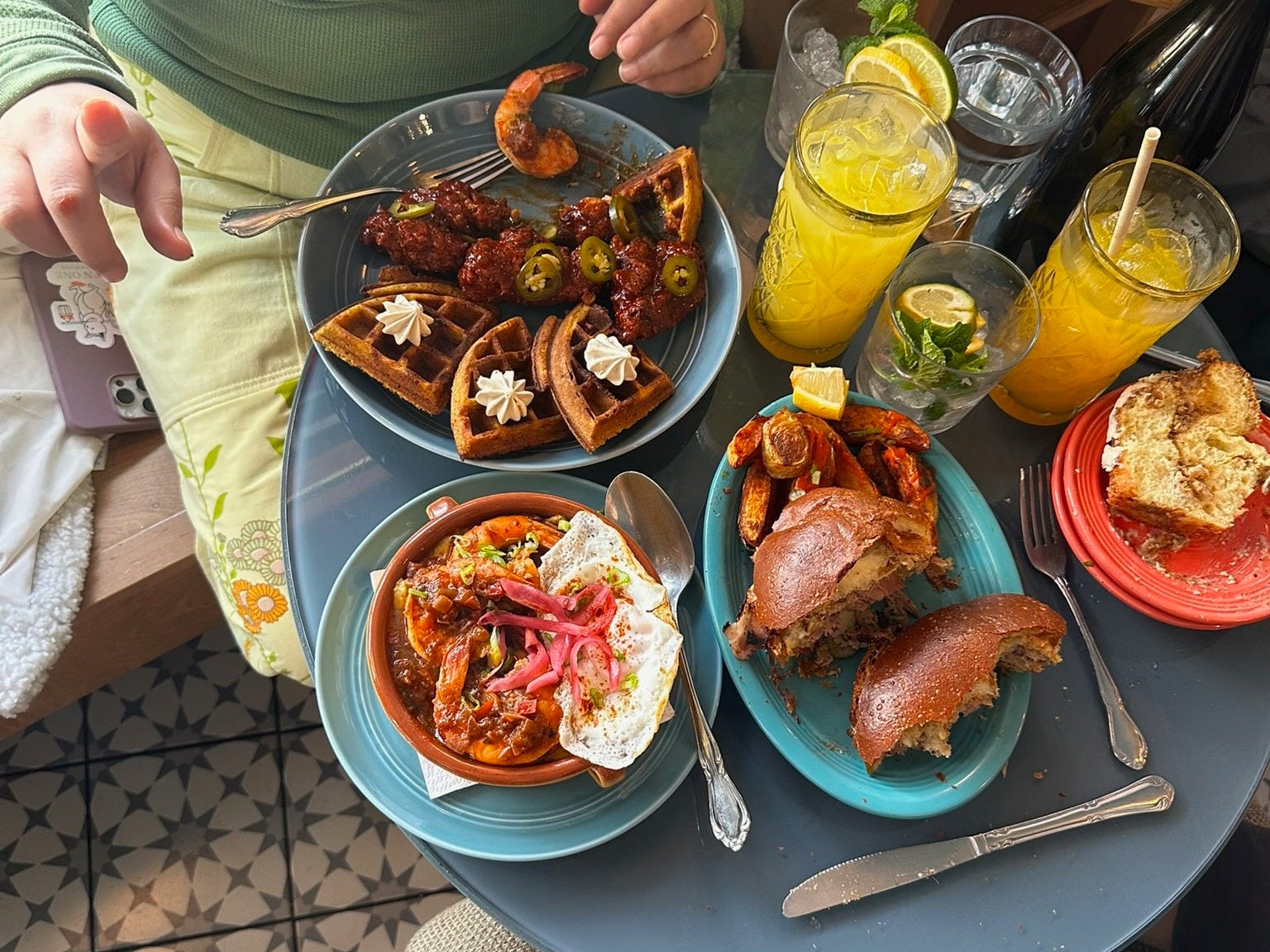
With a good setup, I know I can get a ticket out in thirteen minutes flat.
Even with a board full of tickets, eighteen dishes on the rail, the tiny fryer overloaded with mofongo pucks, eggs poaching, pernil warming in the oven, shakshouka bubbling on the range, and me pivoting around a kitchen so small, I can cross it from end to end in two wide strides. It feels less like cooking and more like dancing inside a bathroom stall.
I’ve been back on the hot line at Little Sister for three weeks, prepping and cooking our weekend brunch for up to 100 covers per service. Before, I’d usually be running our pastry program and delegating the hot line to our young cooks. Pastry plays to my strongest suit and the asynchronous work allowed me to stop as needed and help the team. My station was close enough to keep an eye on the ticket rail, ready to jump in at a moment’s notice and clear the board, but not buried in the weeds.
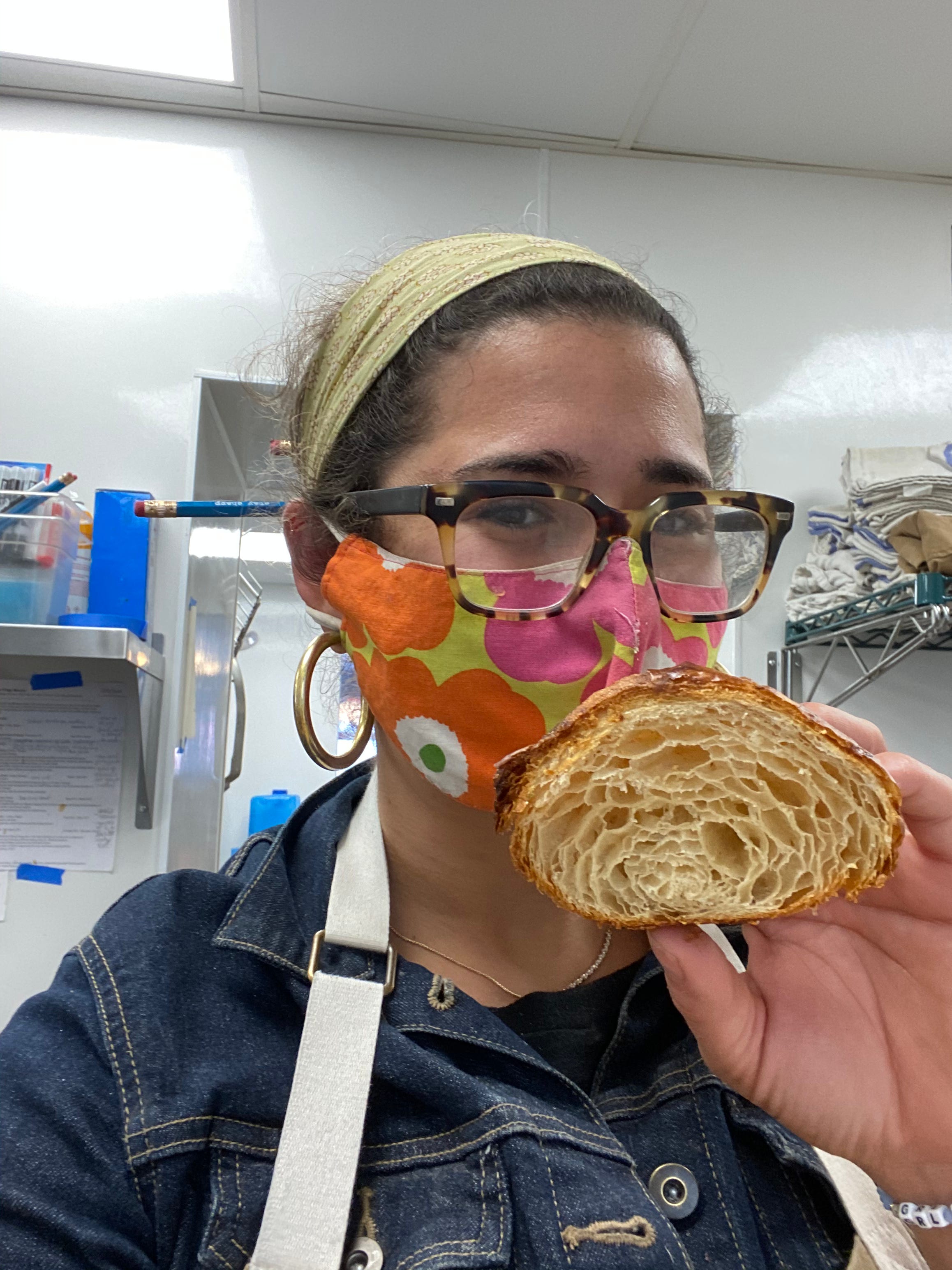
As our young cooks graduated culinary school and moved away, we stopped replacing them and started absorbing the work into the existing team. Shaving labor hours from the schedule forced us to focus: find efficiencies, increase batch sizes, and make every prep hour count.
And then a month and a half ago, Luis, my cook of two years, put in his two weeks. The last one. Now I’m really in the thick of it.
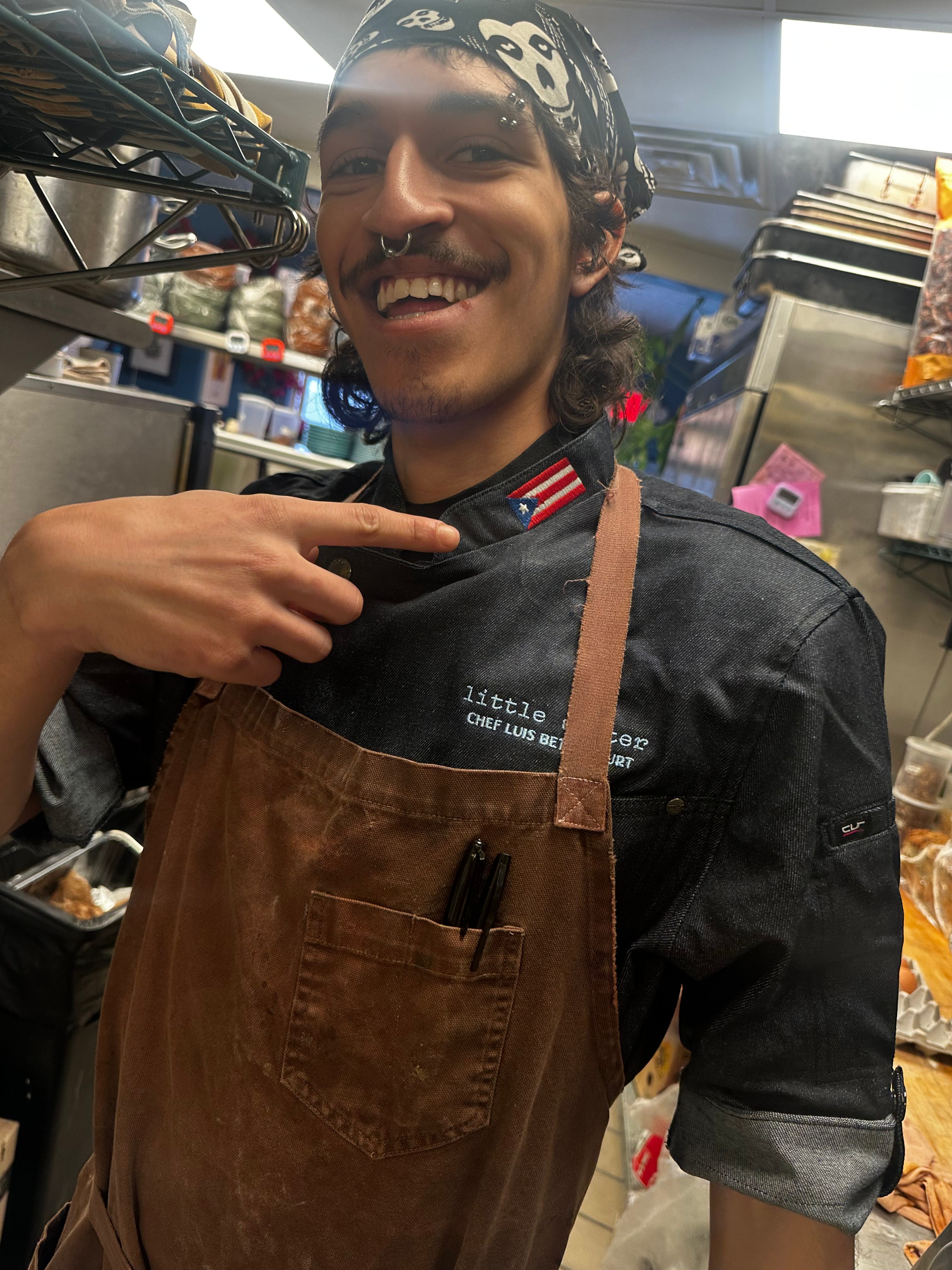
I felt the loss like a little brother leaving the family home. Luis came to us as a Diasporican kid from Newport barely a year or two out of high school making wraps and salads at a bougie natural grocery store on Aquidneck Island. He came in for his interview without a printed résumé and I would have dismissed him quickly if he hadn’t said his favorite subject in school was math. As a test, I pulled out a recipe and made him scale it two ways. He aced it, so I took him on. In my kitchen, he learned classic Puerto Rican dishes like pollo guisado and rice with pigeon peas. He learned to cook sauces from scratch and became a master at emulsions.
And then just like that, he was gone.
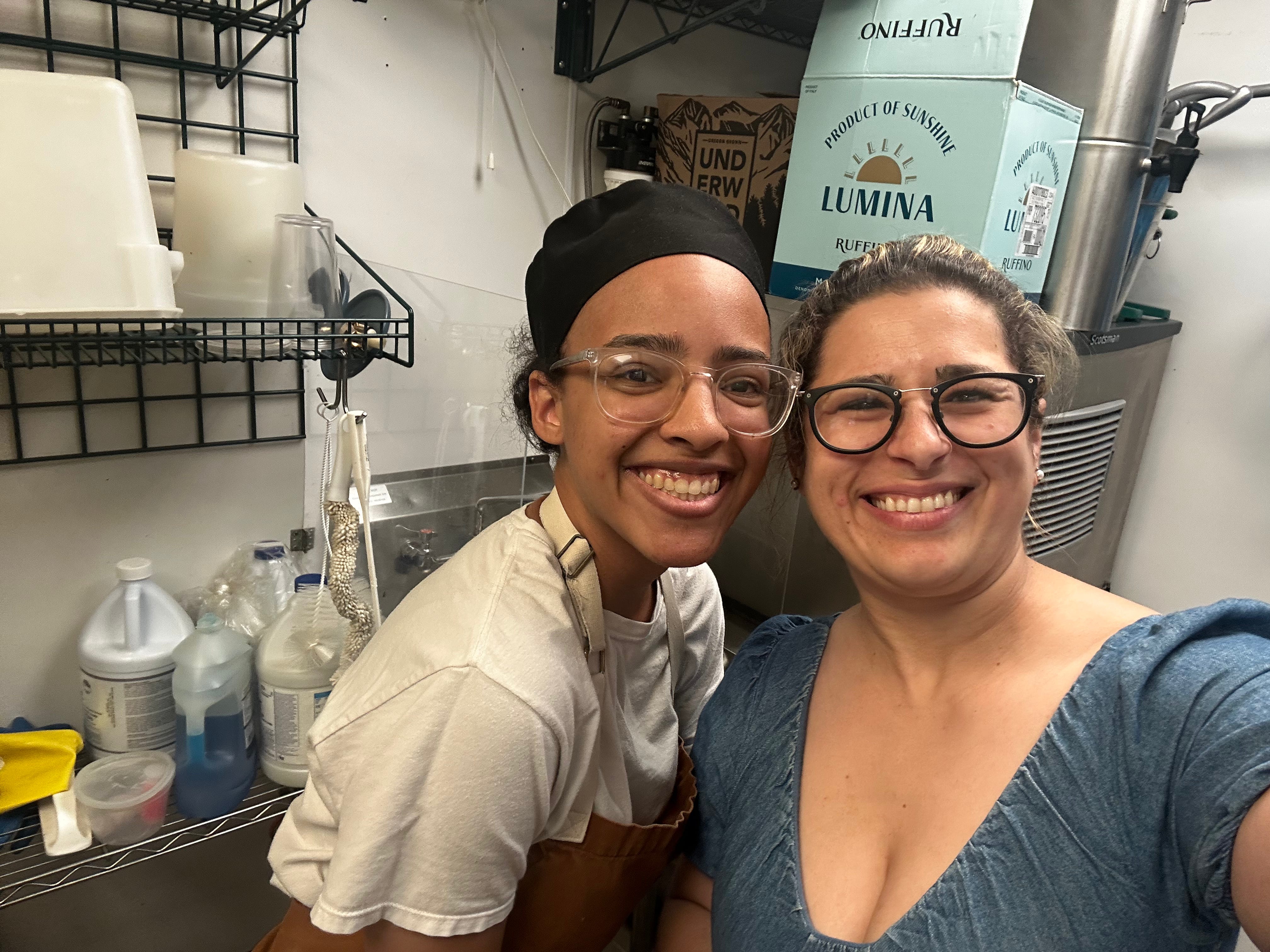
I briefly considered rehiring the role but we decided as a team to absorb it. Michelle would pitch in harder with pastry, I’d plug in during the week, and we’d get prep help every other Sunday from Yani, another young Puerto Rican culinary grad who’s stayed in the orbit even after leaving our kitchen.
The spring is traditionally our busiest time with college graduations and final hurrahs, but the economy has cratered so our busiest isn’t what it used to be. No sense in hiring and training someone who’d be hitting their stride just as the peak is winding down. I’m also just… burned out from the Providence hiring pool. You get Michelin-wannabe tweezerheads who think they’re above cooking brunch — even with a James Beard-semifinalist chef — or people who like the idea of a scratch kitchen more than the coordination, repetition, and urgency it actually requires. Or people who want to cook, just not Puerto Rican food.
If you’re new here: Hi, I’m Milena — the chef and restaurateur behind Little Sister and Rebelle. In Latent Heat, I share a glimpse of the hospitality life, publish original recipes, and explain the business behind restaurants.
If you’re already subscribed, thanks for being here. If not, you know what to do…
They say work expands to fill the time allotted to it. I figured the same would work in reverse. I’ve managed to keep the line stocked and stayed on top of pastry prep by putting in a four- or five-hour prep shift during the week, plus multi-tasking at high gear during service when I hit a rare ten-minute gap between tickets.
I love the rush of cooking under pressure
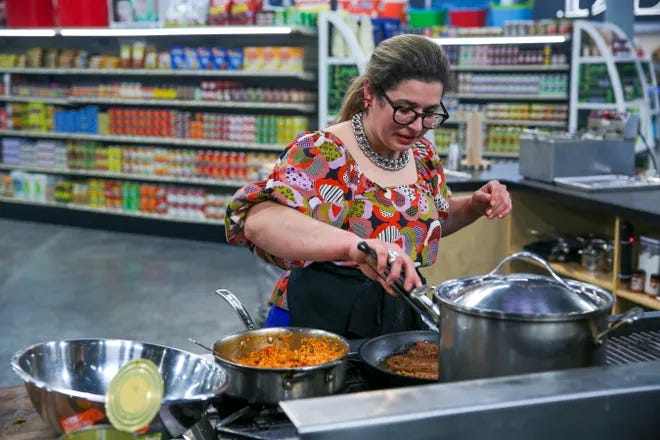
I am insanely competitive, a trait I’ve only owned as a positive in the last few years when it led me to success in the Food Network game shows.
I don’t enjoy competing against others as much as I like to exceed my own performance. From the hot line, I have almost complete control of the pacing for the restaurant. If I can make the food fly out of the kitchen, I can give the room back a little of the time it loses to late arrivals, indecision, weather, bottlenecks, and all the tiny chaos of brunch.
This kitchen is perfectly sized for one chef with manic energy, two if they have good choreography. Three gets too crowded. I can unload the fryer with one hand while the other cracks eggs into a hot cast iron skillet. The setup is engineered to help me shave seconds off ticket times with every movement.
On the line, I channel the intensity and focus of a Formula 1 pit crew gearing up for seamless two-second stops in a Grand Prix race. I drink a strong Puerto Rican espresso, quietly work through my setup, sort my priorities and just lock the fuck in for service.
Ticket time is not only a matter of focus and physical energy. It is design — I can move that quickly because I built the menu that lets me. The prep list, the station layout, the batch sizes, the garnishes, the sauces, the oven pickups, the fryer times, and the poaching setup have all been built around one central question: can this dish survive a brunch rush?
Prep is the architecture
It’s taken me six years to land on a brunch menu where most of the pieces feel truly modular. A dish cannot survive a four-turn brunch rush if every component exists only for itself or if it’s too time-consuming for service. A flexible, modular menu has been key to streamlining the prep — that’s all the behind-the-scenes work that allows us to make the food quickly when the ticket comes in.
Without streamlined prep, running a menu that has breadth and depth becomes impossible. The station gets too crowded. The burners get monopolized by a dish that has to be built from scratch to order. Garnishing, a crucial part of the experience, becomes the bottleneck and suddenly you’re putting out sloppy, ugly plates.
For me, prep is the most peaceful, most zen form of cooking. Every week, I spend thirty minutes peeling and julienning ten quarts of onions to caramelize on the stove for ninety minutes, mostly hands-off. I have to do it when we’re closed to the public, as people here are very, very sensitive to the smell of onions cooking, but it’s become a form of me-time. Those carmies get used on three dishes — the Cremini Mushroom Melt, the Mofongo Benedict and the Loaded Potato Skillet — to stretch the proteins and add depth of flavor.
But my favorite form of modular cooking is sauce work. Sauce is where the menu gets interesting.
When I eat something delicious, it’s usually the sauce that sticks in my memory. Functionally, sauce lets me create distinct dishes out of the same brunch building blocks: proteins, carbs, eggs, vegetables. It takes up less space, stretches further, and can become other sauces. That is where the puzzle starts to come together.
I make this fabulous bravas sauce with roasted red peppers, garlic, Fresno peppers, lemon juice, a little EVOO and a healthy lashing of Spanish smoked paprika. If you order a side of potatoes, it comes drizzled with bravas instead of ketchup. That same bravas gets blitzed with maple syrup, citrusy Timur peppercorns, garlic powder and cider vinegar to make our fried chicken sauce, simply called “maple bravas.” That one is fucking addictive. I like to fry the drips of buttermilk-and-egg batter that settle into the chicken dredge and slowly grow into fake nuggets, then dip them in the sauce. Nothing sweeter than a cook’s scrappy treat!
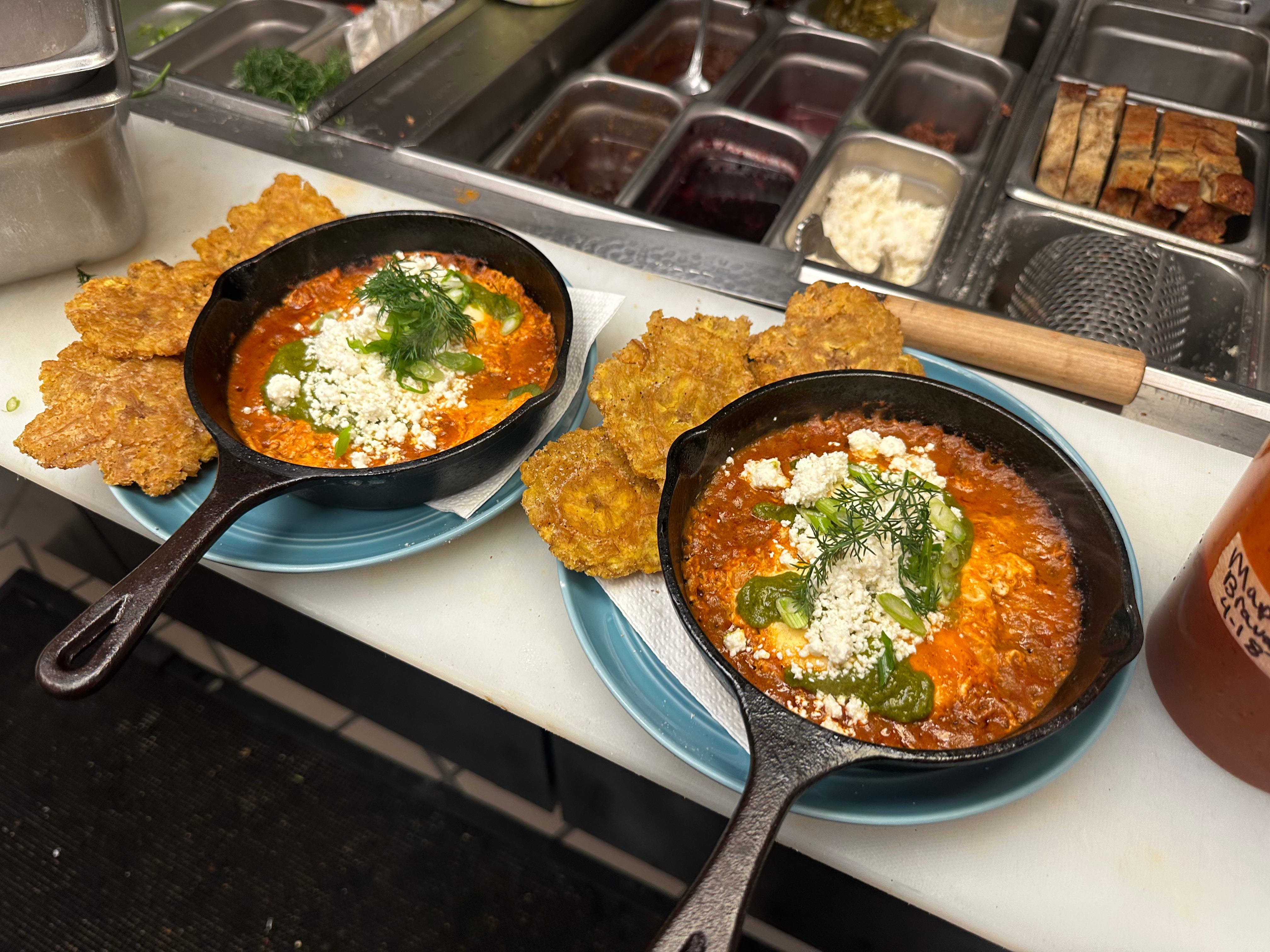
Sometimes the sauce is not supporting the dish. Sometimes the sauce is the dish.
The shakshouka, our third best-selling plate, has a sauce so complex the recipe barely fits on one double-sided index card. It takes me about ninety minutes to mise, cook, and blend it, but only about four minutes to assemble a shakshouka to order and call for hands at the pass. Every time I get a shakshouka ticket, I see money. I started bottling it last year so people can DIY shakshouka at home, and maybe discover other fun uses for it. I love it on meatballs.
But that is the whole game: I shift the labor to the quiet part of the week so the dish can fly during the busiest part of service.
It’s not about speed — it’s about care
Efficiency sometimes gets a bad rap, as if the only way to be efficient is to strip the food of its soul. That’s not what I’m after. A plate can be quick because it is lazy, or it can be quick because every piece of it has been thought through.
The cognitive load of a full board can be so overwhelming that sometimes you forget the goal is to give people pleasure. To make food beautiful and delicious, you need enough room to notice if an egg looks sad, refire it, add the extra spoonful that makes a plate feel generous, and wipe the rim of a smudged bowl before even that starts to feel optional. If you are not well set up, there is no time for beautiful and delicious. That’s just losing the plot.
Sheer physical speed can only get you so far with ticket times. At 36, I am starting to feel the physical effects of a decade of ten-hour kitchen shifts and coming home exhausted to slump on the couch. I am not as fast as I used to be. Luis, with his long limbs and spry energy, moved quickly with little effort and a strong iced horchata latte. I need two cappuccinos — one during open, one mid-morning — and a different approach.
We do fried chicken only for one dish, the Chicken Chicharrón and Sweet Plantain Waffles. Every time I eat it for team lunch, it slaps. I understand why it sells: it’s a generous, high-flavor spin on an iconic brunch dish.
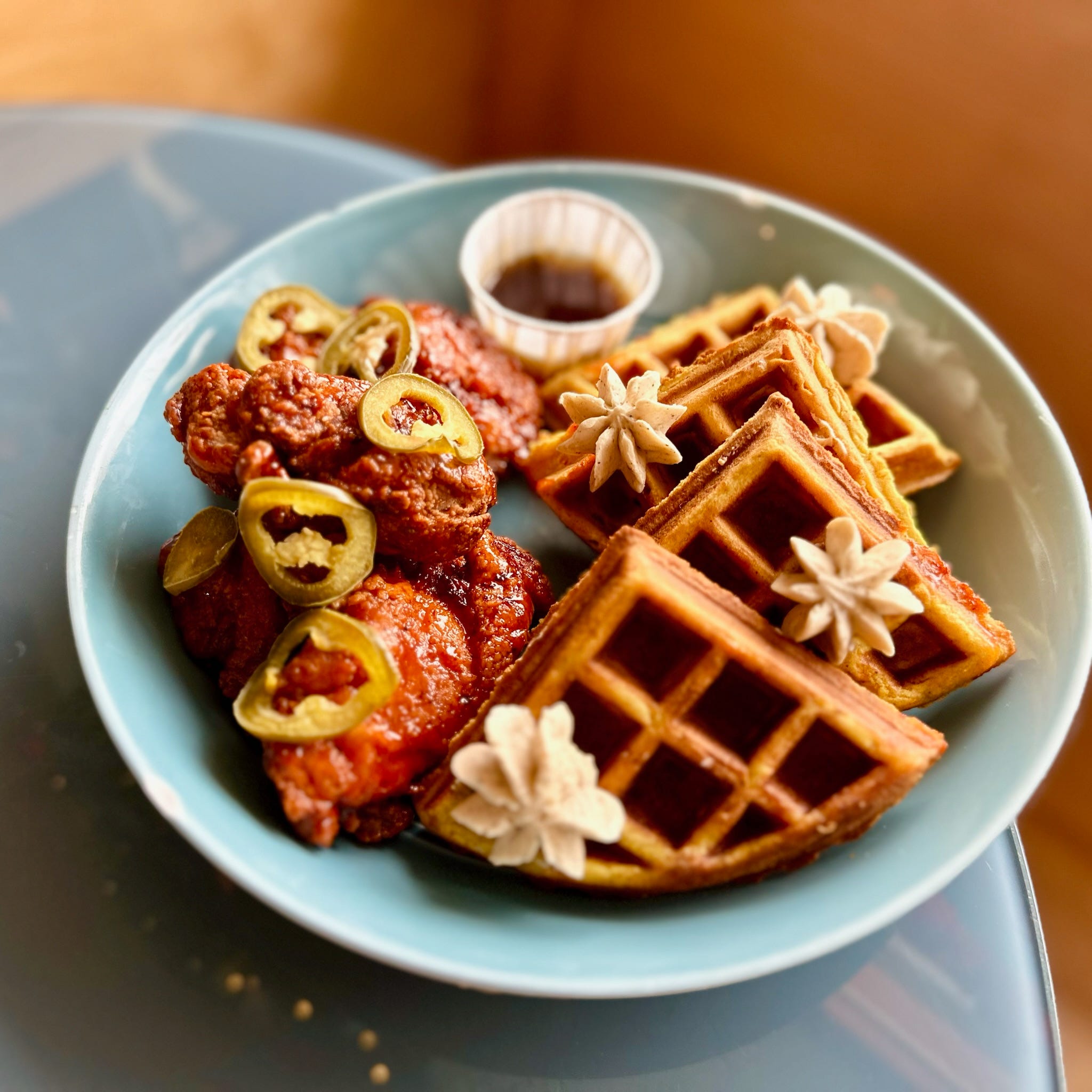
It’s also insanely time intensive: house-ground spice blends, sweet plantain waffle batter with whipped egg whites, buttermilk-brined chicken, honey-whipped brown butter stars that are a bitch to make. But that’s all prep. Then, the chicken has to be fried to order — five to six minutes of cook time — before you even begin to assemble.
I have every incentive to streamline the prep, hold the quality and protect this rising star. Dredging the chicken to order takes up space and requires me to change gloves and wash my hands twice. I was dreading the dredging. You know what’s much better? Batching a half-sheet with eight orders and keeping it at the very bottom of my fridge. Cleaner and faster. I can grab them with dedicated tongs, drop them in the fryer to order and set a five-minute timer while I assemble the rest of the plate.
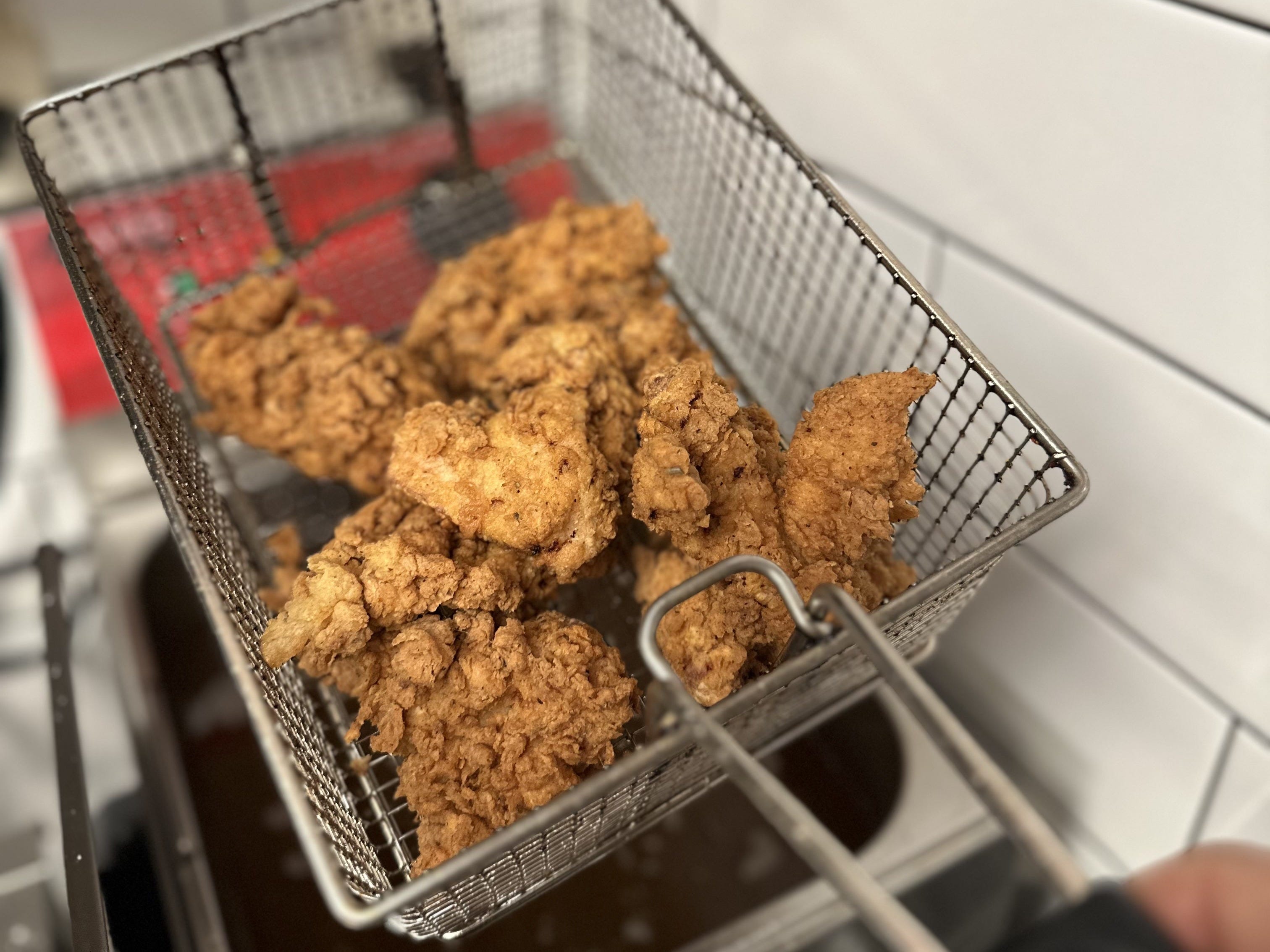
Cooking this dish got better because I removed the part of the process that made me resent seeing the ticket. Less rushing, more attention to texture and temperature, to portion and presentation.
The kitchen holds emotional memory and power
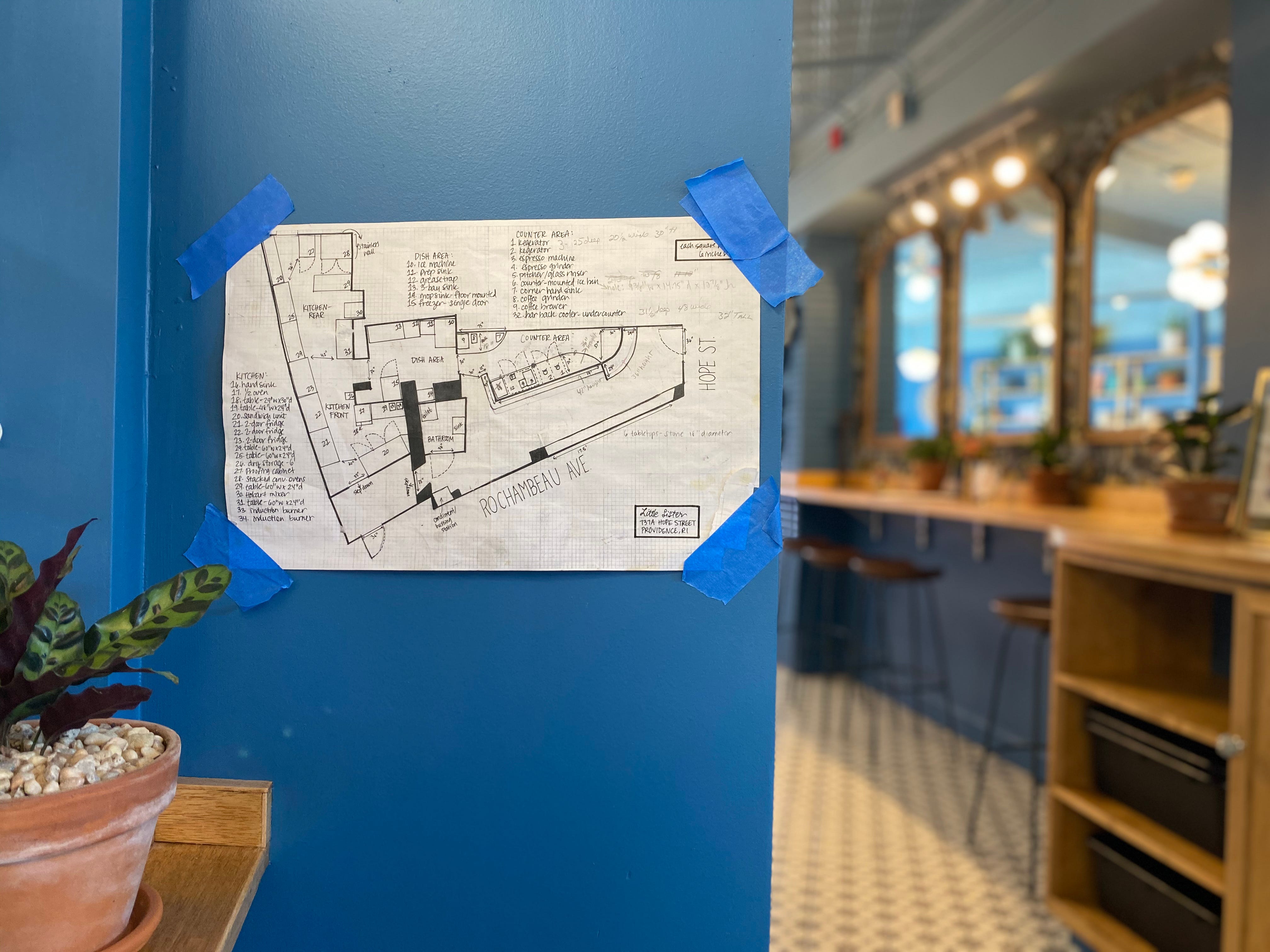
Every time I step into the driver’s seat in the kitchen, it feels electric. I remember building it during the pandemic, sizing the equipment, choosing the oven/burner/mini fryer setup, paying for tile on the wall, trying to design a kitchen I had not yet lived inside. When I work in it now, I give kudos to myself from six years ago. Everything is where I need it. I’m proud of what this kitchen holds, what it has put out, and what it has fed me.
Related Reading:
Dear Guests: Let Me Cook Eggs for You, My Way

Last Sunday, I cooked brunch at Little Sister and someone ordered a Mofongo Benedict with eggs well done and hollandaise on the side—a bizarre request that threw a wrench in my line at peak brunch time. Huffing and puffing, I made it anyway, but the request triggered me so much that I’m still thinking about it.
Stop Growing What You Want to Eat

I started sowing seeds for my home garden a few weeks ago, on March 18. Despite keeping a garden for thirteen years, with the last three being my most fruitful harvests, I’d never considered planting with the moon cycles. The period between a new moon and a full moon is said to be the best time to start seeds and transplant — the same gravitational pull…
Zero-Waste, Except for the Strip Steak

Eater Boston recently published an article about a new restaurant opening in Cambridge whose stated goal—featured prominently in the headline—is to be “zero-waste.”
Drooling! This all sounds so good.
Loved this read, and thank you for sharing! This lent me a great chuckle of recognition ~ "On the line, I channel the intensity and focus of a Formula 1 pit crew gearing up for seamless two-second stops in a Grand Prix race. I drink a strong Puerto Rican espresso, quietly work through my setup, sort my priorities and just lock the fuck in for service."